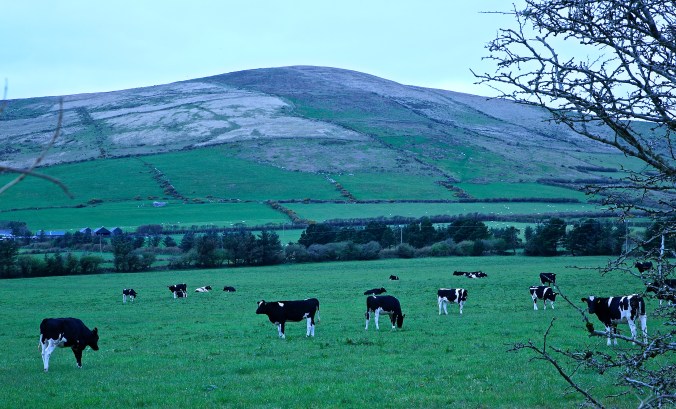
“Come into the yard,” the Young Farmer says, “and I’ll show it to ye.” We cross the yard and he points to the hill above.
“Just there, between the trees so, above the shed roof.” He gestures toward the hill. The Young Farmer is about six feet two inches, and I am not. I can’t see a thing. I go up on my toes, straining, and then I see it. “It’s An Teampall Geal. On Easter morning, sunrise, we have the Mass up there.”
He gives us directions. “Go up to the top of the road and turn right at the lane. You’ll walk a while past the farm house on the left and the yard on the right. The farmer’s name is Tue but he’ll be busy with the lambing. He has no English, but he’ll know why you’re there. Past the yard there’s what we would call a bohereen and at the end a gate. Close the gate behind ye and ye can walk up.”
From the road below, I had naively assumed the spot on the hill was just a pile of rocks. Sara and Lucy and I walk up the road and down the lane. On the right runs a stream teeming with watercress. Memories.
My father loved watercress. When I was a young boy, perhaps six or seven, Dad and I would explore the streams in Mill Creek Park, searching for a hidden trove of cress. It was elusive, and only occasionally did we find it. But when we did, we had a quiet celebration, Dad would smile, and plan a special salad for that night. I smile my Dad’s smile when we pass this stream.
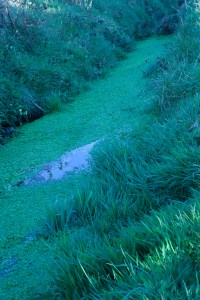
The Cress Stream
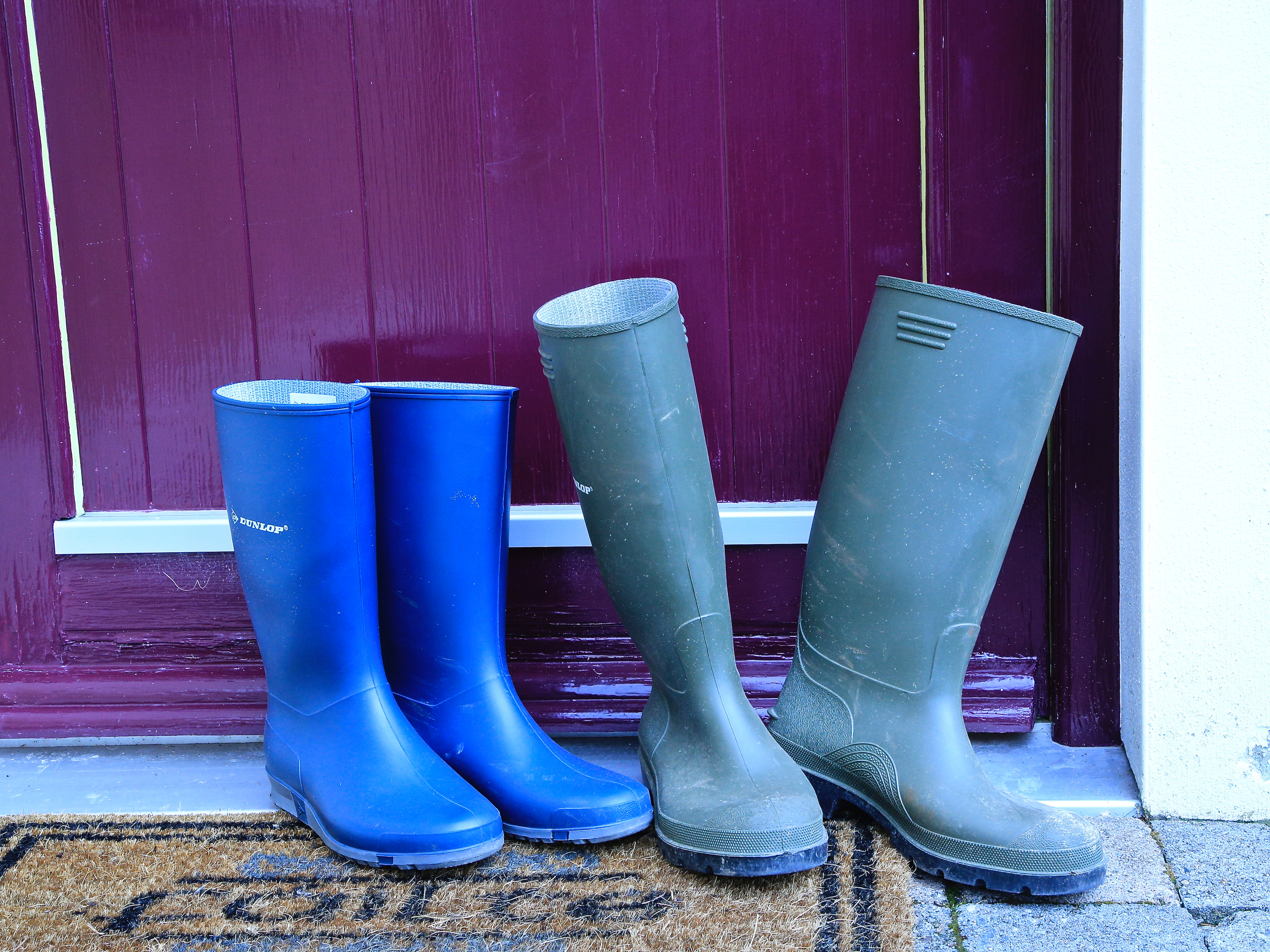
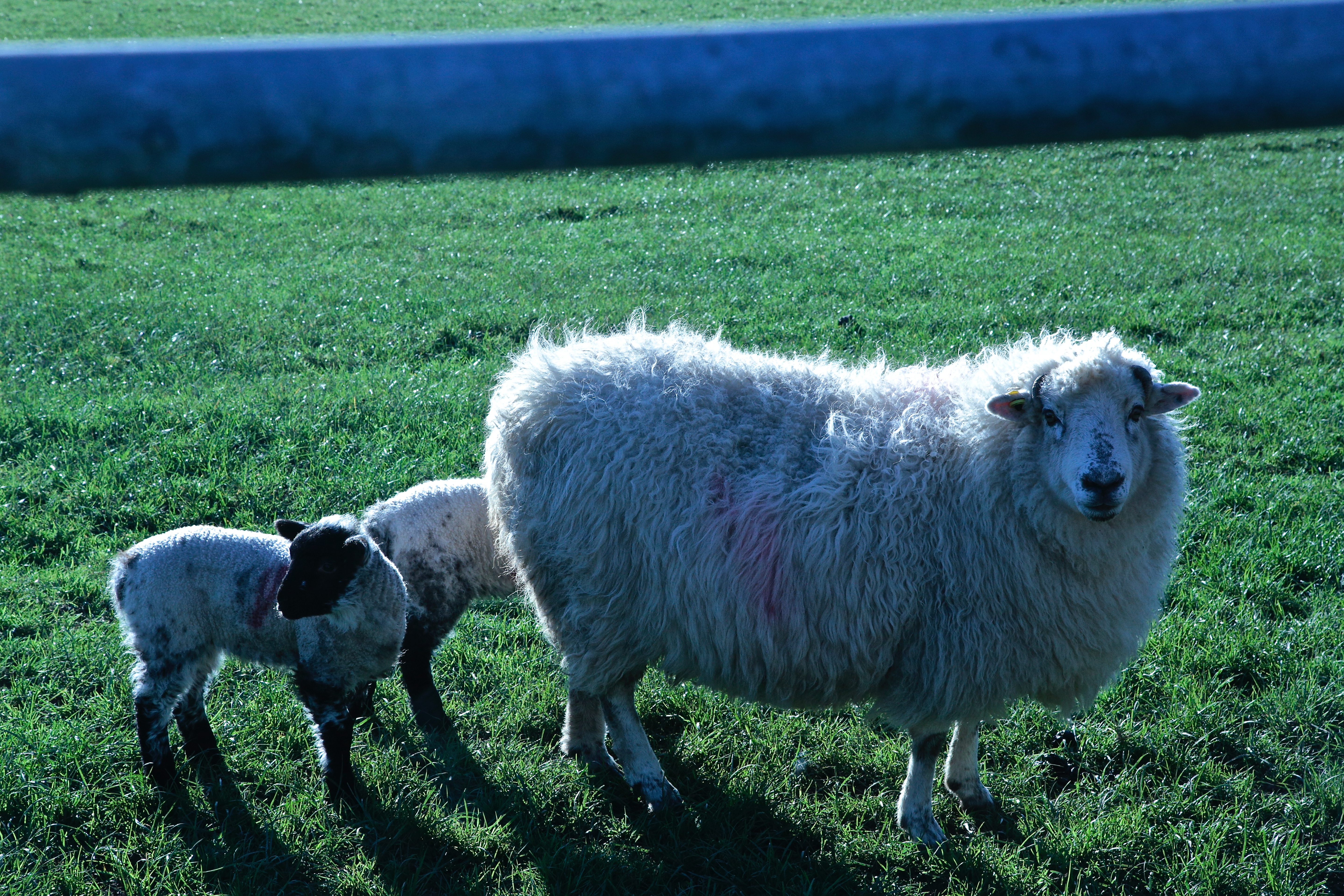
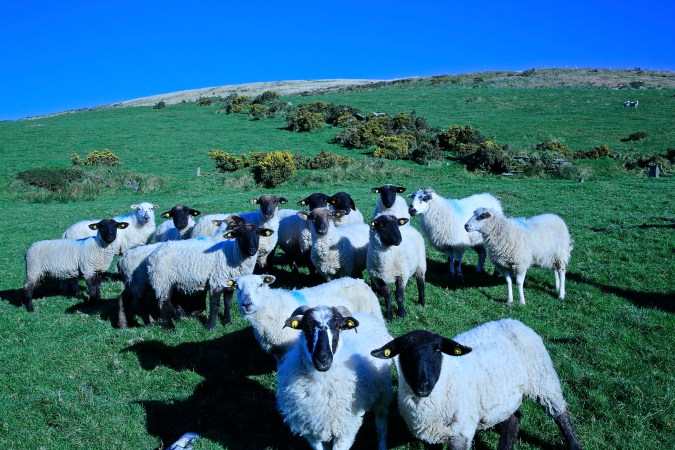
The lane past the yard turns into the bohereen and the bohereen turns into ankle-deep mud. We have our Wellies but Lucy does not. The mud reaches her knees. She steps gingerly, unsure of her footing. I lift the loop of twine and swing open the three bar gate and then close and secure it behind us as we slog up the track. The sheep in the fields beside us start to scatter, unsure of these strangers slipping toward them with their little dog that looks nothing like any sheep dog they have ever known. And the pile of rocks begins to take form.

The bohereen

Taking form
An Teampall Geal, or the Bright Oratory in English, is a dry-stone structure from around the eighth century. Dry stone means that no mortar was used in its construction, just perfectly fitted stones piled atop one another, fashioned by craftsmen with no modern tools but a wealth of patience. The stones were laid so that the interior side of the stone is slightly higher than exterior side and the stones gradually slope upward to meet at a peak. Imagine an overturned boat. The stonework allowed the interior to remain dry while the rain runs off in the wet Irish climate. There are dozens of oratories scattered around the Dingle Peninsula. Archeologists differ about their use. Some suggest they are early Christian hermitages or churches while others claim they were meant as guesthouses for pilgrims to Mt. Brandon, just over the hill. Competing claims are still hotly debated in the pubs at night just for the sport of it.
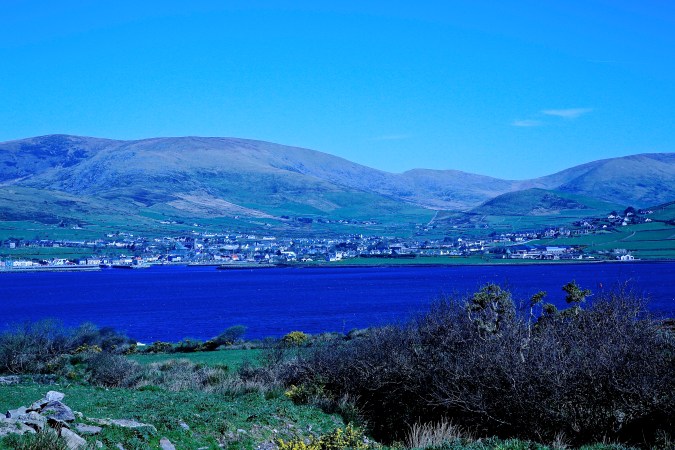
The Bright Oratory has lost its roof. Its perfection has fallen victim to the centuries. Just on the other side of the hill above us is the Gallarus Oratory, a perfectly preserved structure, though many dispute its age. With that perfection you get a three Euro admission fee, a gift shop selling post cards and models of the oratory, and hordes of tourists disgorging from the buses. Here at An Teampall Geal you get solitude, mystery, and skittish sheep. And stunning views of Dingle Bay and Skellig Michael many miles to the south. You can hear the birds sing and the wind rustle through the gorse. We like it better here, alone on the hillside with our thoughts and our dog, pondering imperfection.

Strangers

Dry Stone

Looking to Skellig

Guarding the door
Outside the oratory there is an Ogham stone standing guard over the reputed grave of St. Manchan. Ogham stones are standing stones that are marked with groups of cut horizontal lines on either side of the sharp vertical edge of the stone, an early form of writing known as ogham. This stone also has a cross enclosed in a circle marking it as Christian. Not much is known about St. Manchan, where he came from, or why he chose this hillside above Dingle to live his life. Was he an outcast from a nearby monastery or a hermit seeking his god? Did he revert to the recent pagan past and worship the sun and the stars and the birds around him? We’ll never know. It’s a mystery.
We head back down the track to the bohereen, the slap and squelch of the mud sucking at our boots, and think about what we’ve seen. Lucy will need a bath and we could use a warm fire. We’ll ponder the mystery. And we’ll be back for Easter morning.
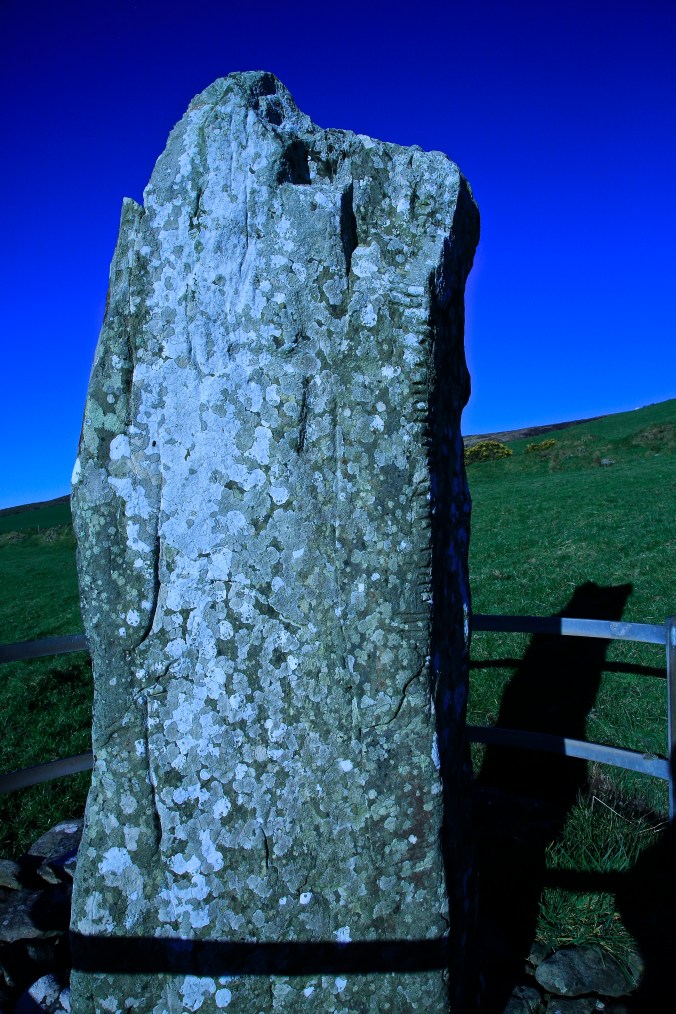
The Ogham Stone
“Turn right at the lane near the top of the road,
Passing the house to your left and the yard to your right.
Tue has no English, but he’ll know where ye go. He won’t mind
That ye pass so, since many have passed before.
Just close the gate behind ye.”
The mud is as slick as an otter’s pelt as we slip
And slide up the track. And the sheep on the hill turn to trot
Away with a glance as the strangers approach. It’s there
Across the far field, that the stones come to life and form
The church and standing stone.
Manchan did you lay the stones alone?
Were you exiled from Skellig for your sins?
Did you spend your nights staring across the sound
Praying for forgiveness?
Did you live your life alone and know
The birds before they sang their song?
Did you eat the cress from the stream?
Do the strokes on your stone tell your secret?
Manchan, who were you? Did you know?




 Mullenaglemig Diary