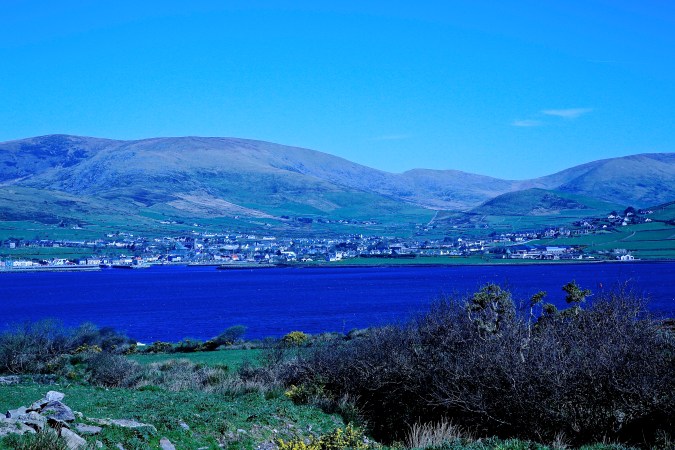
An Easter Song

In twos and threes they climb the hill,

Some lean on sticks to aid the trek.

The sun has yet to rise above

The bay.  They gather near the stones.


“The largest crowd I’ve ever seen”

The priest and acolytes prepare

The table, roughly made of wood

And placed before St. Manchan’s cross.


More torches bob below us now.

In ainm an Athur” he begins.

The ancient tongue is all they need

Today to praise their risen lord.


A whistle plays a solemn air

And voices rise to greet the sun.

We walk back down the hill to home

Scattering sheep as we go.

The Manchan Mystery

“Come into the yard,” the Young Farmer says, “and I’ll show it to ye.”  We cross the yard and he points to the hill above.

“Just there, between the trees so, above the shed roof.”  He gestures toward the hill.  The Young Farmer is about six feet two inches, and I am not.  I can’t see a thing.  I go up on my toes, straining, and then I see it.  “It’s An Teampall Geal.  On Easter morning, sunrise, we have the Mass up there.”

He gives us directions.  “Go up to the top of the road and turn right at the lane.  You’ll walk a while past the farm house on the left and the yard on the right.  The farmer’s name is Tue but he’ll be busy with the lambing.  He has no English, but he’ll know why you’re there.  Past the yard there’s what we would call a bohereen and at the end a gate.  Close the gate behind ye and ye can walk up.”

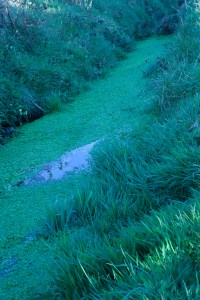
From the road below, I had naively assumed the spot on the hill was just a pile of rocks.  Sara and Lucy and I walk up the road and down the lane.  On the right runs a stream teeming with watercress.  Memories.

My father loved watercress.  When I was a young boy, perhaps six or seven, Dad and I would explore the streams in Mill Creek Park, searching for a hidden trove of cress.  It was elusive, and only occasionally did we find it.  But when we did, we had a quiet celebration, Dad would smile, and plan a special salad for that night. I smile my Dad’s smile when we pass this stream.
_K6A6437

The Cress Stream

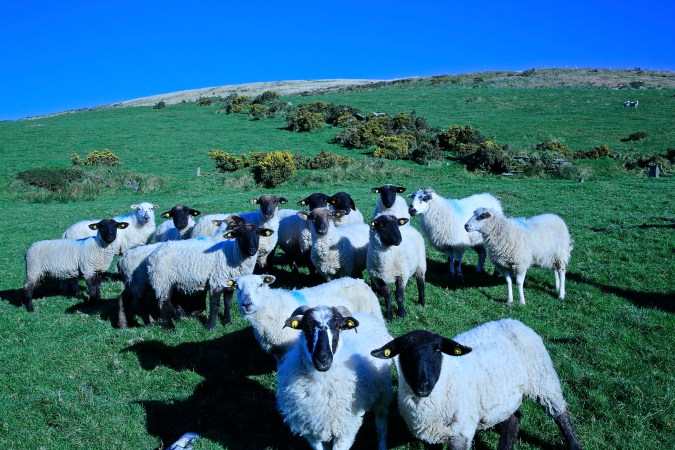
The lane past the yard turns into the bohereen and the bohereen turns into ankle-deep mud.  We have our Wellies but Lucy does not.  The mud reaches her knees.  She steps gingerly, unsure of her footing.  I lift the loop of twine and swing open the three bar gate and then close and secure it behind us as we slog up the track.  The sheep in the fields beside us start to scatter, unsure of these strangers slipping toward them with their little dog that looks nothing like any sheep dog they have ever known.  And the pile of rocks begins to take form.

An Teampall Geal, or the Bright Oratory in English, is a dry-stone structure from around the eighth century.  Dry stone means that no mortar was used in its construction, just perfectly fitted stones piled atop one another, fashioned by craftsmen with no modern tools but a wealth of patience.  The stones were laid so that the interior side of the stone is slightly higher than exterior side and the stones gradually slope upward to meet at a peak.  Imagine an overturned boat.  The stonework allowed the interior to remain dry while the rain runs off in the wet Irish climate.  There are dozens of oratories scattered around the Dingle Peninsula.  Archeologists differ about their use.  Some suggest they are early Christian hermitages or churches while others claim they were meant as guesthouses for pilgrims to Mt. Brandon, just over the hill.  Competing claims are still hotly debated in the pubs at night just for the sport of it.

The Bright Oratory has lost its roof.  Its perfection has fallen victim to the centuries. Just on the other side of the hill above us is the Gallarus Oratory, a perfectly preserved structure, though many dispute its age.  With that perfection you get a three Euro admission fee, a gift shop selling post cards and models of the oratory, and hordes of tourists disgorging from the buses.  Here at An Teampall Geal you get solitude, mystery, and skittish sheep.  And stunning views of Dingle Bay and Skellig Michael many miles to the south.   You can hear the birds sing and the wind rustle through the gorse.  We like it better here, alone on the hillside with our thoughts and our dog, pondering imperfection.

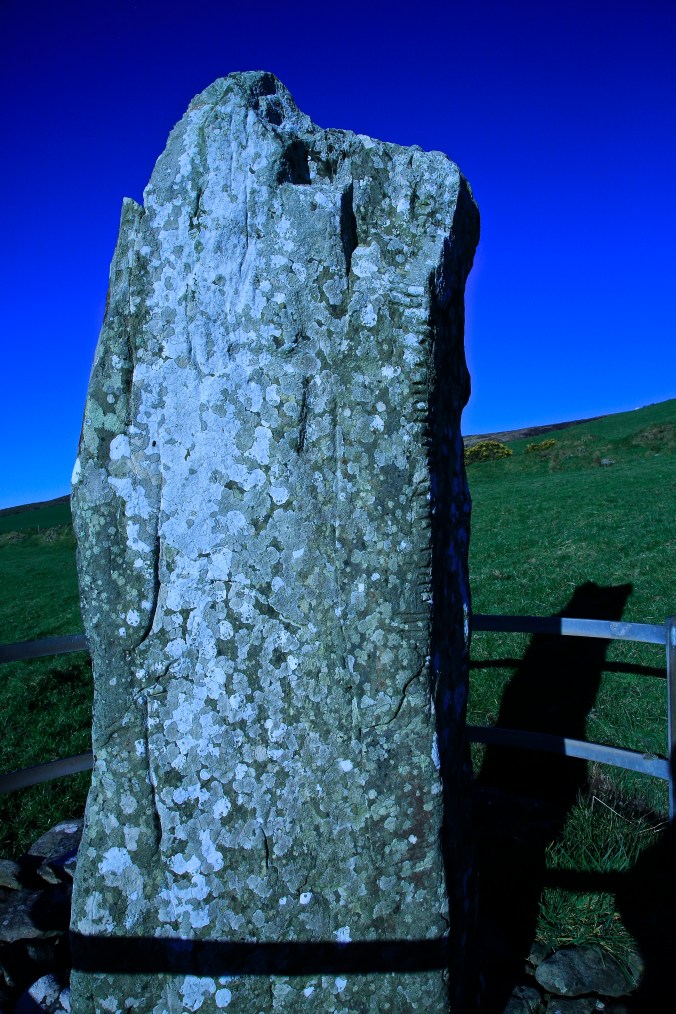
Outside the oratory there is an Ogham stone standing guard over the reputed grave of St. Manchan.  Ogham stones are standing stones that are marked with groups of cut horizontal lines on either side of the sharp vertical edge of the stone, an early form of writing known as ogham.  This stone also has a cross enclosed in a circle marking it as Christian.  Not much is known about St. Manchan, where he came from, or why he chose this hillside above Dingle to live his life. Was he an outcast from a nearby monastery or a hermit seeking his god?  Did he revert to the recent pagan past and worship the sun and the stars and the birds around him?  We’ll never know.  It’s a mystery.

We head back down the track to the bohereen, the slap and squelch of the mud sucking at our boots, and think about what we’ve seen.  Lucy will need a bath and we could use a warm fire.  We’ll ponder the mystery.  And we’ll be back for Easter morning.
_K6A6471

The Ogham Stone

“Turn right at the lane near the top of the road,

Passing the house to your left and the yard to your right.

Tue has no English, but he’ll know where ye go.  He won’t mind

That ye pass so, since many have passed before.

Just close the gate behind ye.”


The mud is as slick as an otter’s pelt as we slip

And slide up the track.  And the sheep on the hill turn to trot

Away with a glance as the strangers approach.  It’s there

Across the far field, that the stones come to life and form

The church and standing stone.


Manchan did you lay the stones alone?

Were you exiled from Skellig for your sins?

Did you spend your nights staring across the sound

Praying for forgiveness?

Did you live your life alone and know

The birds before they sang their song?

Did you eat the cress from the stream?


Do the strokes on your stone tell your secret?

Manchan, who were you?  Did you know?
Walking

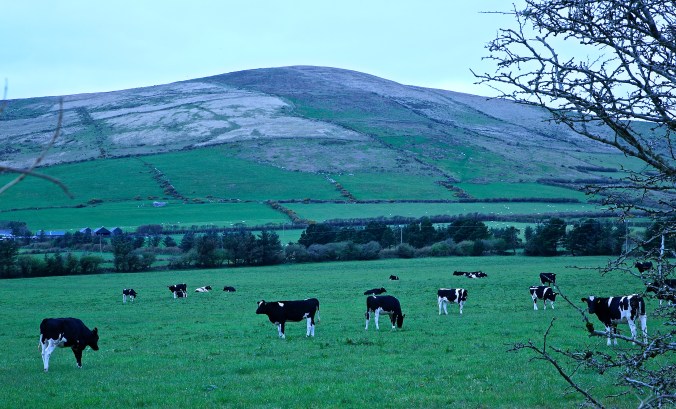
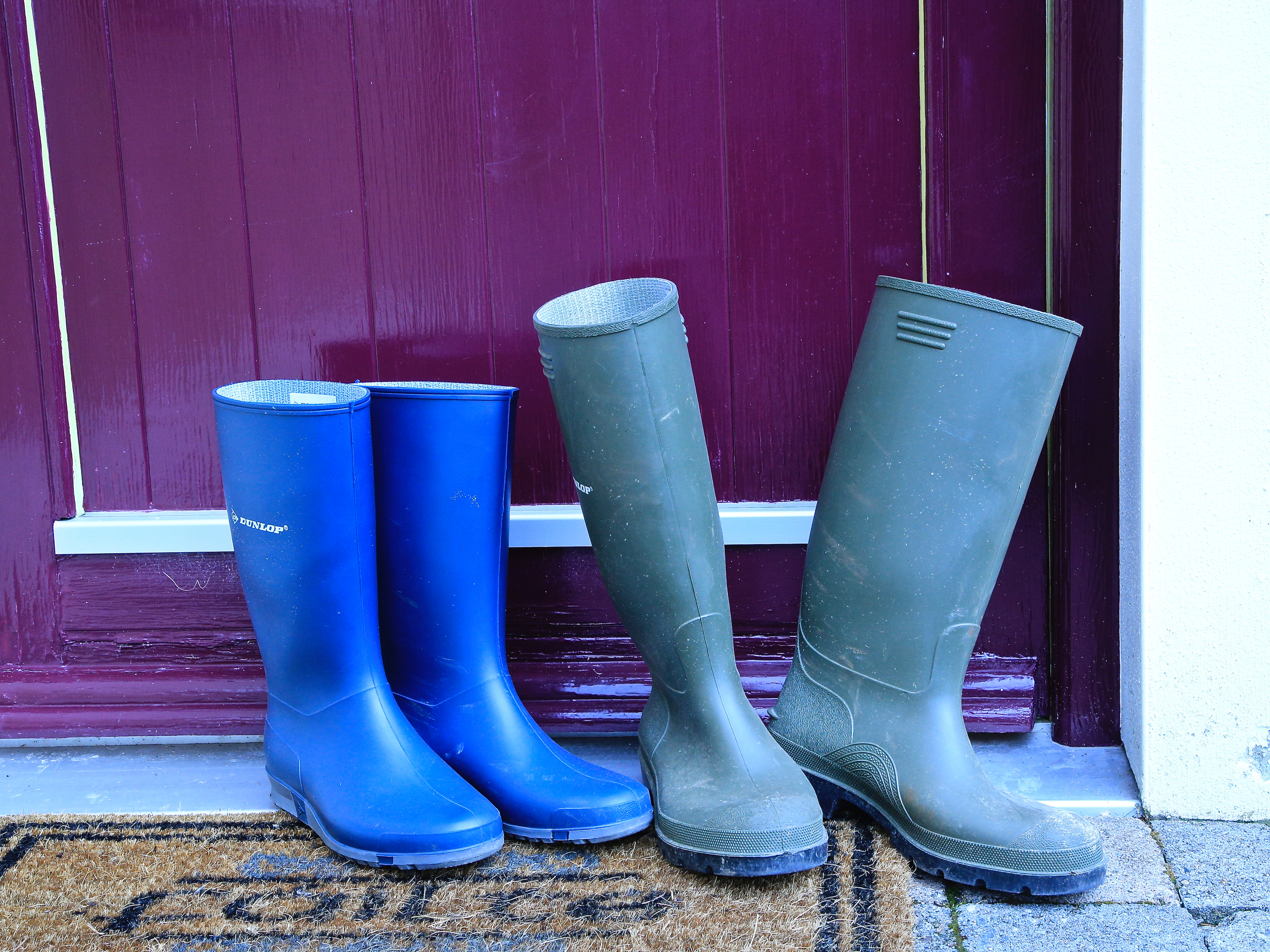
Most days we go for a walk along the lanes near our house.  We pull on our Wellies and at our gate we ask, “Which way?”  Right takes us through Mullenaglemig and then up the hill to Caherboshina and back down the Ventry road to our gate. Left leads us to Burnham and Lord Ventry’s former estate.  Each journey is about four miles.  Today we chose right.

In Santa Fe we could cover four miles in a little over an hour.  Here it takes longer as you stop and chat with the neighbors or see how the spring lambs are getting on or if the bullocks are adding weight or if the horses would like an apple.  All the while you have to check what is blooming in the hedgerows and step lightly around the manure in the road.  Thus the Wellies.

k6a6525.jpg

As we pass the wall of the middle bungalow just below us, a head pops up from the other side.  We say the customary “How are ye? Fine day” as we pass.  (Yes, we’ve unconsciously started to say “ye” rather than “you”).  He practically begs us to stop, saying, “Please talk to me.  This hole is almost killing me.”  He’s digging a hole on the other side of the wall so his son can plant a shrub.  We pass the time for a while until he has the strength to go back to work.

Down the lane a bit an old Irish bachelor farmer wearing his Sunday suit, jacket and jumper buttoned up tightly, cap tight on his head, has pulled a kitchen chair out of the house, planted it on the walk just in front of the gate, and is enjoying the rare sun and the nearly sixty degree day.  We exchange “How’r ye” with him but the conversation ends there since he “doesn’t have much English.”  We live in a Gaeltacht area where much of day-to-day life is conducted in Irish.  Forty years ago, when I first came to Ireland, the old farmer would have had an ass and cart for his transportation.  Now he drives a Volkswagen Golf, circa late 1980s, with a trailer hitch on the back so he can get his sheep to market.  I think of the Tomas O’Crohan line from his book The Islandman, “the like of us will never be again.”  The farmer in the cap and suit is the old Ireland and when he is gone we will all feel the loss.

Near the top of the hill, the big farmer stops his tractor to say hello.  He is both big in stature, standing well over six feet, and in cattle, raising nearly forty-eight bullocks in his expansive pastures.  He is also the man who knows a man who can find you a man, if you know what I mean.  Thomas is the future of agriculture in Ireland, well educated and fluent in modern farming methods.  He can raise bullocks or heifers and plants timber to hedge against bad times in the cattle market.  And he’ll monitor all of it with computer programs.  And the old man down the road will still haul his sheep to market in a small trailer behind the Golf.

_K6A6531

k6a6446.jpg

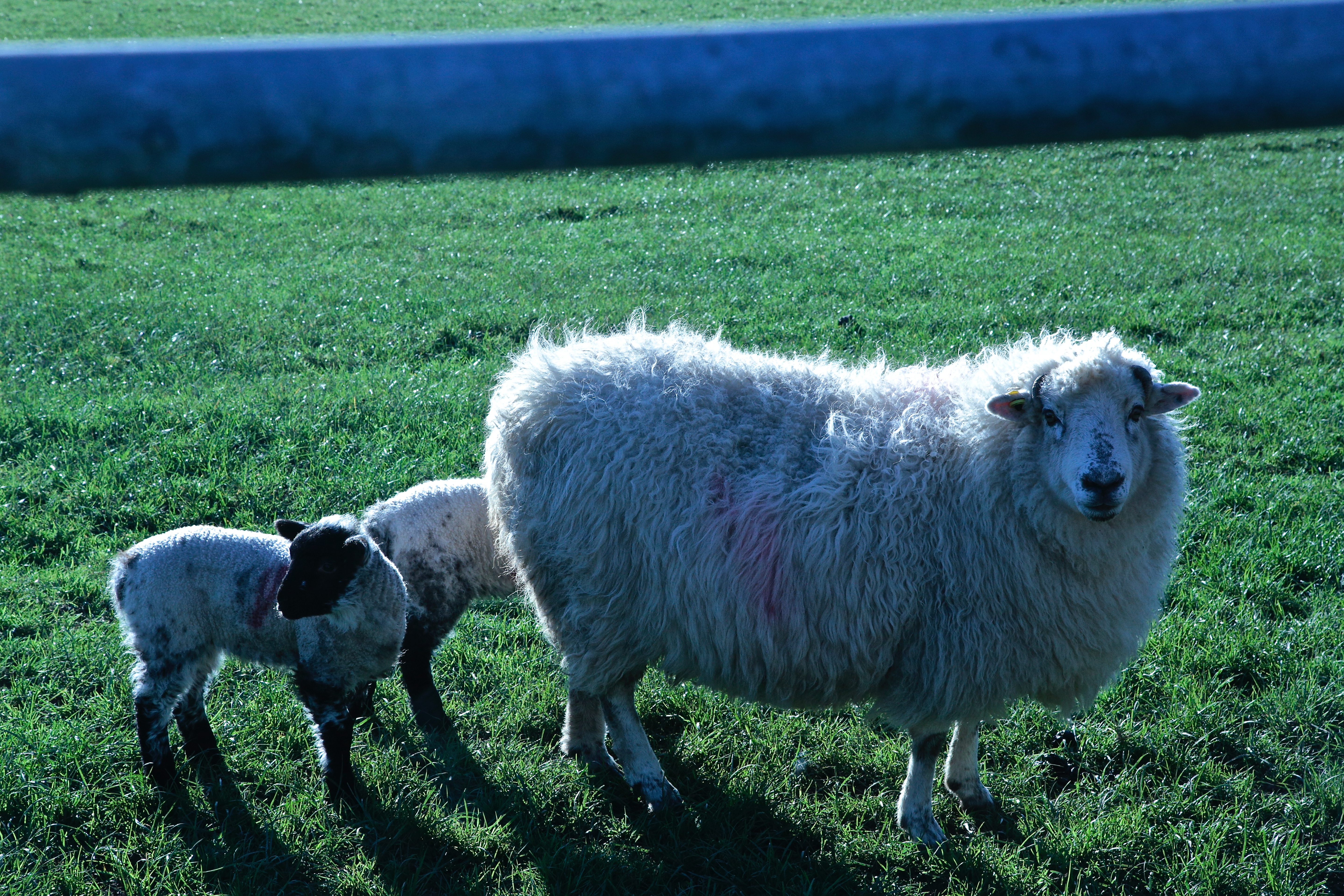
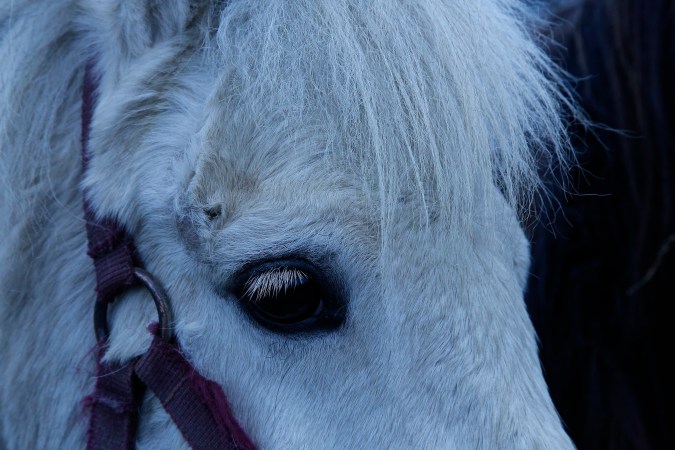
As we turn left at the top of the hill the road narrows considerably so that Sara and I are almost shoulder to shoulder as we walk between the hedgerows.  Lucy darts from one berm to the other chasing new smells and occasionally being chased herself by the sheepdogs at every farm.  The lambs are about six weeks old now and getting more self confident though they rush back to mom as we approach.  The horses readily accept the apples from Sara and graciously allow us to pet them, though Lucy remains unimpressed.

_K6A6558

Gorse shows off yellow blooms that hurt your eyes and thorns that hurt your hands.  Buttercups are seeking the sun and the tiny Easter lilies are preparing to greet the Risen Christ in just over a week.  Holly is turning glossy and the fuchsia is just starting to bud.  By June there will be miles of red and purple blooms lining the lane.

One last turn to the East on the Ventry Road that will lead us home  We walk in the footsteps of Peig and Tomas and the other Blasket Islanders.  This is the road they followed when they ventured into the “English town” of Dingle from their homes some twenty kilometers away.  We’ll soon have a cup of tea and Lucy will take a well deserved nap.

We’ve started a collection of Wellies in a variety of sizes for our visitors this year if they decide to join us on a walk.  The only question is “left or right.”

The Magpies

Two magpies landed in our garden the other evening.  I was cooking dinner when I noticed them through the kitchen window.

We are settling into our new home in Mullenaglemig, Dingle, Co. Kerry, Ireland.  The internet is up and running after two days of work and multiple cups of tea with Denis, our friendly installer.  The boiler is actually boiling after Grainne stopped by to show us how to unplug the wood pellet feeder.  And I’m learning to build a passable fire in our wood stove in the lounge.  We are adjusting to the rhythm of Mullenaglemig.

The road to Mullenaglemig is what is referred to on the maps as a fourth class road, which means it has a maximum width of four meters.  It also means that grass grows down the middle of the road.  When you see a car in the distance you have time to calculate exactly where to pull off to let the other car pass.

Life is slower here.  The lady in line in front of you chats away with the woman running the cash register, talking about all the gossip in town.  After the grand total is announced, she begins to bag her groceries and chats some more.  Then she searches in her purse for her wallet while she moves on to a different topic.  “And how much is it?” she asks.  Only then does she move her bags to the trolley, find the exact spot for her wallet in her purse, and say a long heartfelt goodbye.  It’s our turn now and we begin to chat with the cash register lady.  “Isn’t it a fine, dry day?” we begin.

Some things that we love we cannot get here.  Chicken and vegetable stock.  Tortillas.  Heavy duty foil.  Kosher salt.  We do without.  But the things we can get here take our breath away.  The fish.  My God, the fish.  The fishing boats come into the harbor in the early morning with cod and hake and brill.  Lemon sole and black sole.  Shrimp and mussels.  We hear there will be lobster soon.  It all goes on ice at the fish shop and from there to our fridge.   And then we have pan-fried hake sauced with pan juices or sautéed shrimp with a lemon butter reduction.  Heaven.  But I really need kosher salt.

So Sara orders kosher salt on the internet.  (Thanks, Denis!)  A week later we are out for our walk, about a mile down the road from our house, when the postal van stops beside us and the postman leans out the window and asks, “Sara Kennedy?”  It’s our salt.  I think we are fitting in._K6A6476_K6A6514_K6A6518_K6A6522

Magpies are an omen in Ireland, for good or bad.  There is an old children’s rhyme about magpies that begins:

One for sorrow,

Two for joy

Two magpies in our garden.  Joy.